

When people picture an Asian-inspired tattoo, their mind tends to go straight to traditional Japanese work — dragons, koi, Hannya masks, full sleeves and bodysuits. It’s some of the most beautiful and influential tattooing in the world, and it’s earned that reputation. But it’s only one part of a much bigger picture.
Artists today are drawing on Asian art, culture, illustration, mythology and storytelling in ways that look nothing like traditional Japanese tattooing. The result is a new generation of Asian-inspired work that runs through realism, neo-traditional, illustrative, fine line and manga-influenced styles. If you love Asian aesthetics but a traditional Japanese piece isn’t quite what you’re after, there’s far more open to you than you might think.
One of the most common misconceptions in tattooing is that “Asian-inspired” automatically means Japanese traditional. In practice, the influence shows up in all sorts of ways: through composition and symbolism, colour, character design and illustration technique, through the stories a piece tells and the mythology and folklore behind it. An artist can lean on all of that while creating something that looks completely different from traditional Japanese work. The inspiration stays the same; the artistic language changes.
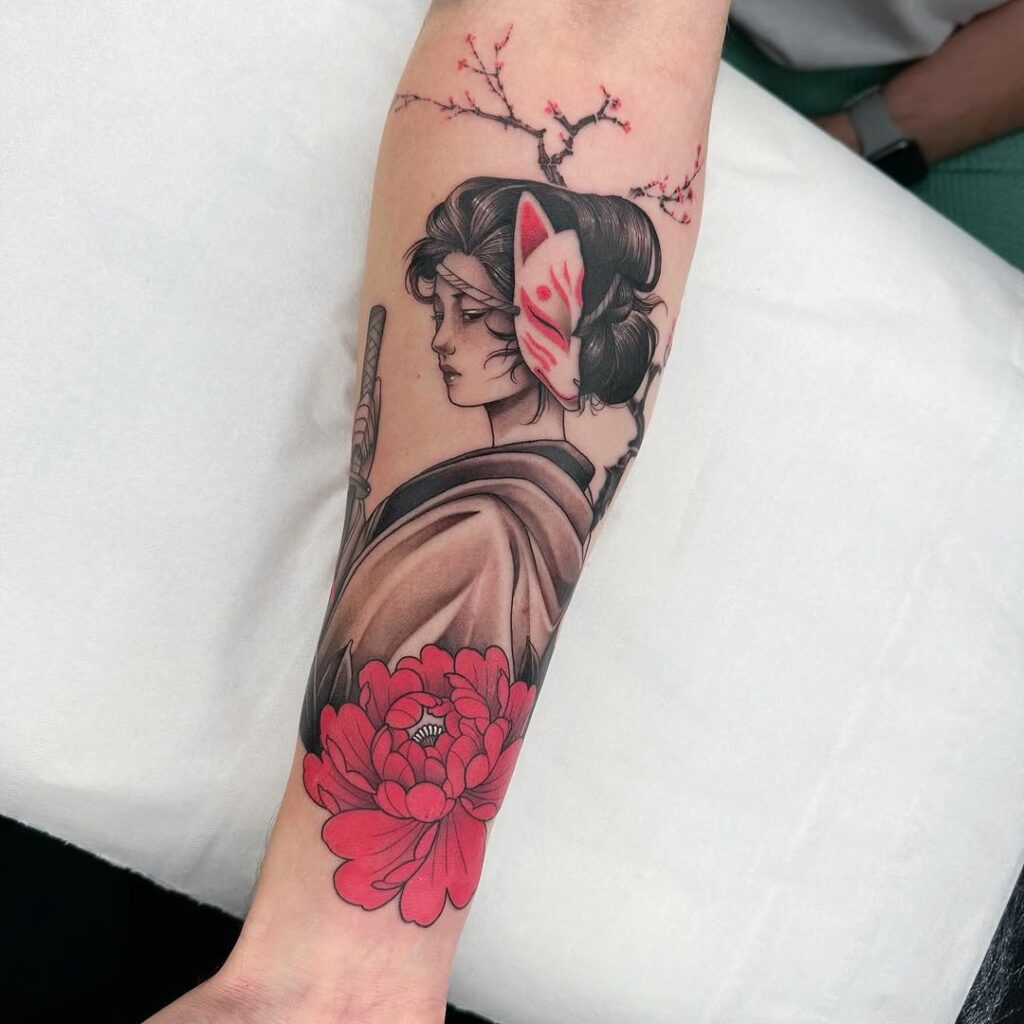
The most interesting artists aren’t copying existing imagery. They’re translating an influence through their own voice — and that’s exactly what makes Bristol artist Loïz’s work so distinctive. Look closely and you’ll see the manga influence, the illustrative quality, the quiet references to Asian visual culture. But it never reads as a reproduction of something that already exists. It feels personal.
Her work says something important about modern tattooing: Asian inspiration isn’t about copying traditional artwork, it’s about understanding the visual language and turning it into something new.
Illustrative tattooing has become one of the most exciting ways to explore Asian influence. Artists pull from manga and anime, Japanese illustration and character design, contemporary Asian art, graphic novels, fashion and visual culture — and the results tend to feel softer, more emotional and more personal than traditional work.
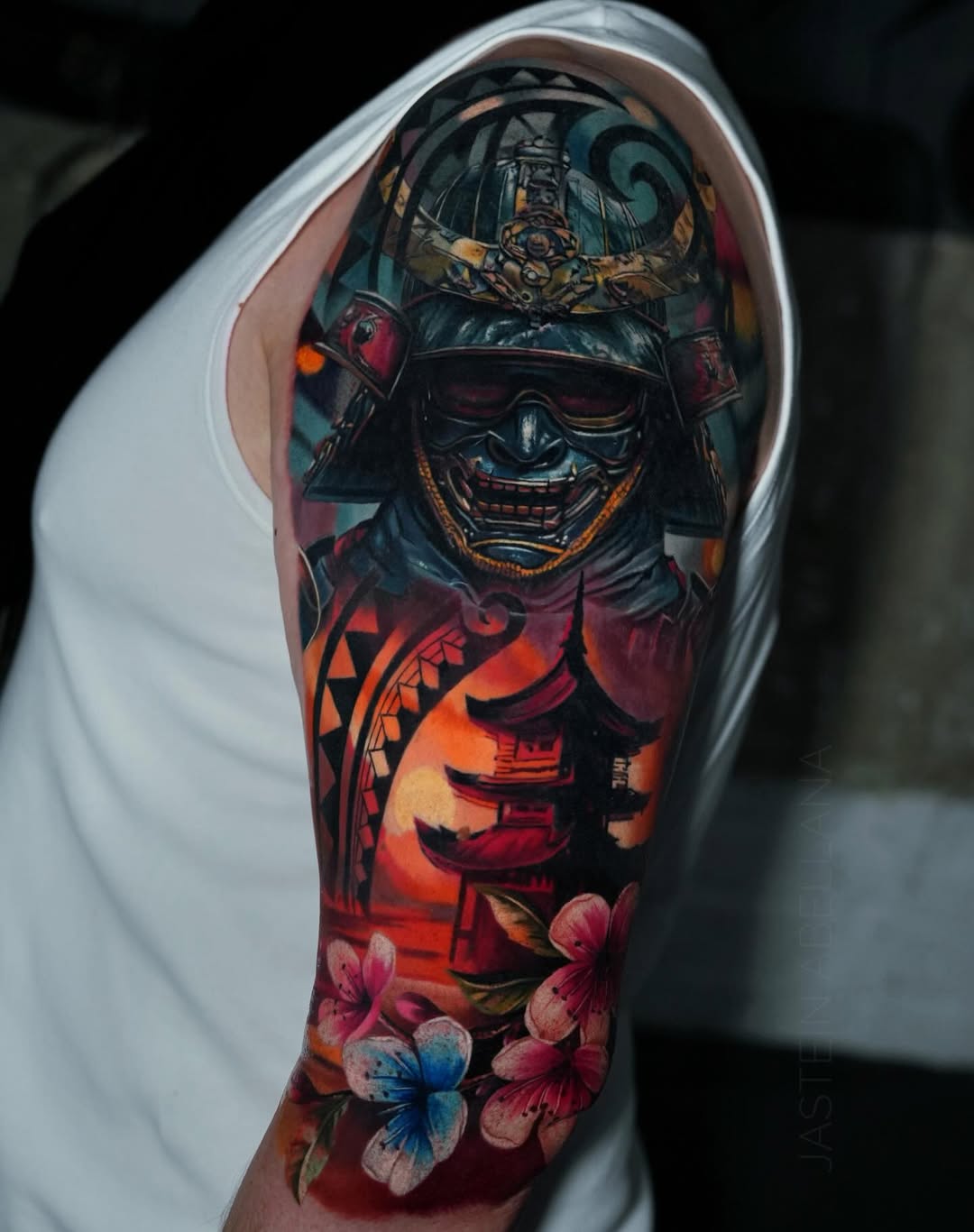
Plenty of realism artists build remarkable pieces around Asian themes and symbolism: samurai and geisha portraits, dragons, Hannya and Oni masks, cherry blossom, Japanese architecture, the creatures of myth. The execution is realism; the inspiration is Asian. It’s an approach that lets you explore the cultural imagery you’re drawn to while staying in a style that feels right for you.
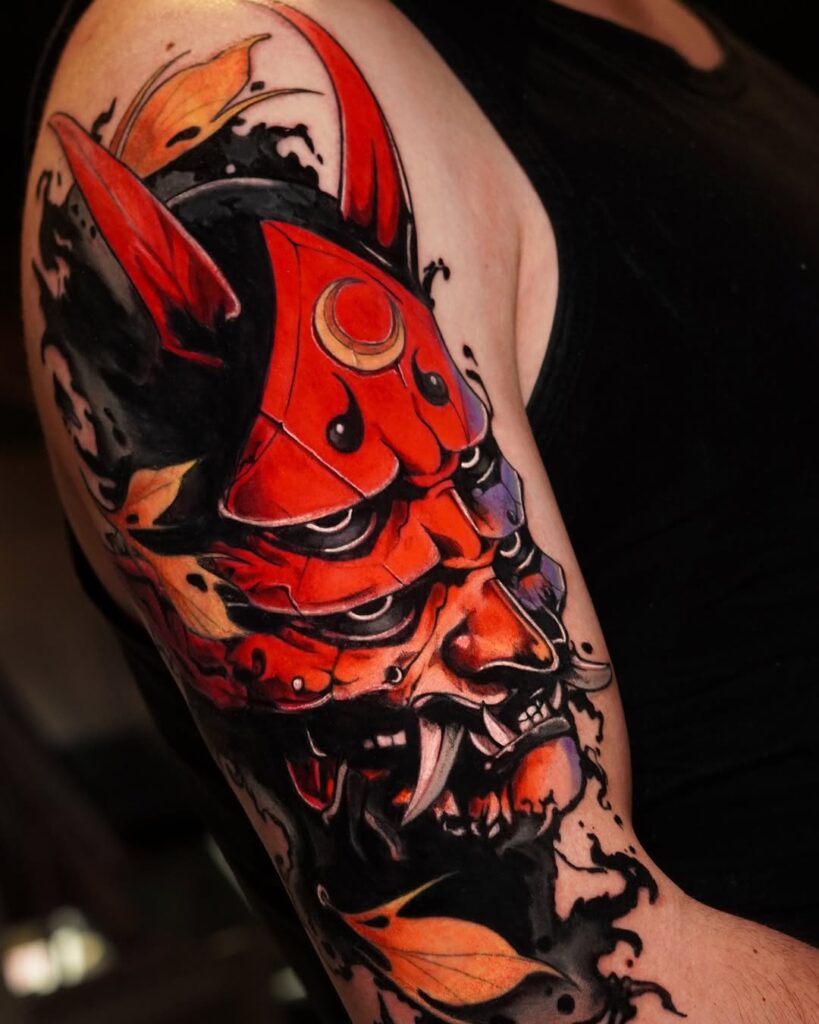
Neo-traditional offers another reading entirely. Here, artists tend to combine bold linework and rich colour with decorative composition, traditional symbolism and a contemporary illustrative hand. The result feels rooted in Asian culture while keeping the bold readability, and the longevity, that neo-traditional is known for.
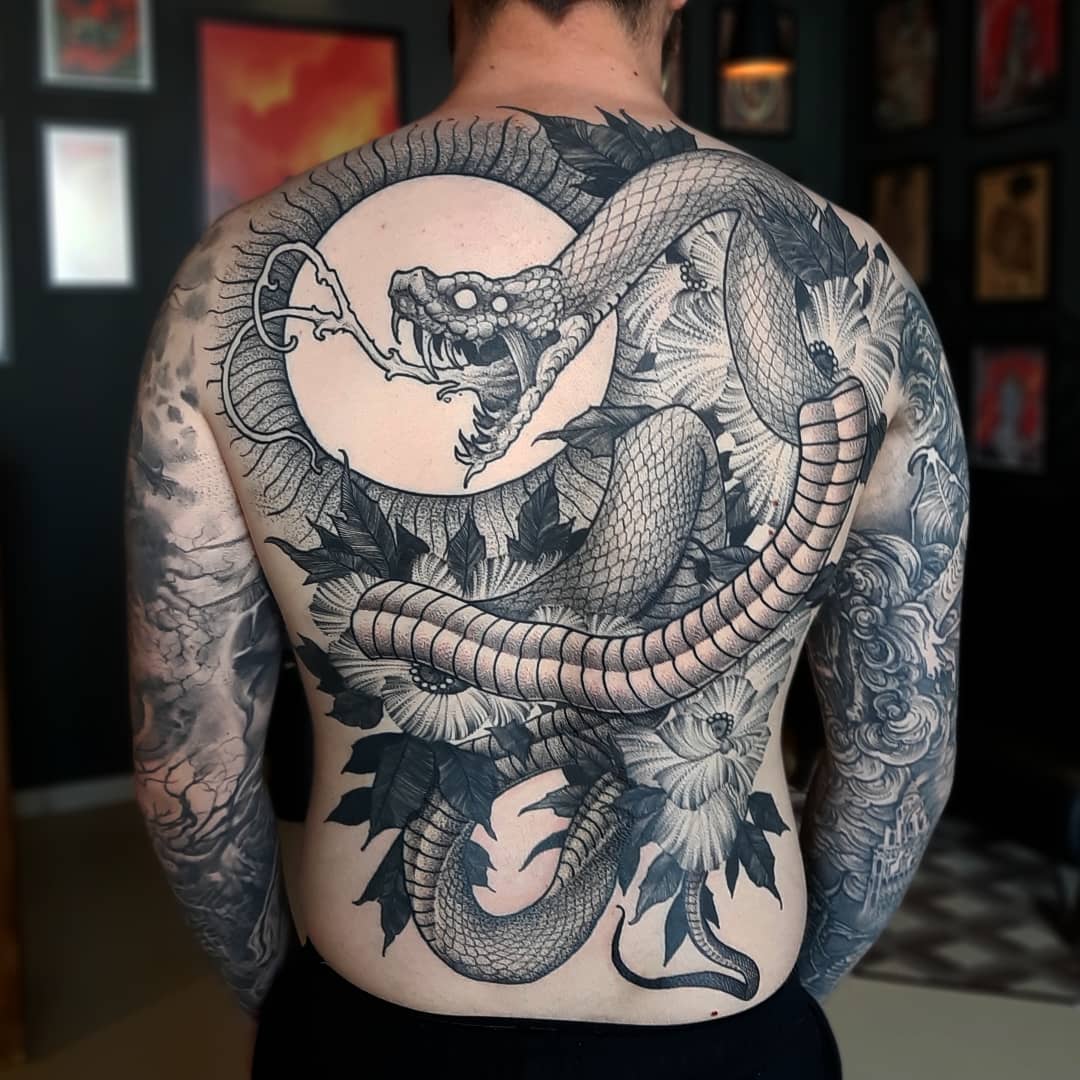
Blackwork has become one of the most striking ways to reinterpret traditional Asian imagery. Rather than the bold colour usually associated with traditional Japanese tattooing, blackwork artists work in solid black, heavy contrast, stippling, textured shading and strong negative space to create depth and impact. Large areas of saturated black sit alongside fine detail, and the effect is dramatic, graphic and thoroughly contemporary even as it draws on centuries-old Japanese composition and symbolism.
For anyone who loves Japanese imagery but prefers a darker, more graphic aesthetic, blackwork is a genuine alternative to traditional colour work — and a clear example of how Asian-inspired tattooing keeps evolving, taking themes that go back centuries and reinterpreting them through an entirely new style.
Concept tattoos are a more modern, design-led way into Asian imagery. Instead of one large traditional composition, this approach brings several elements together in a smaller, more detailed area. The main subject might be a samurai, a dragon, a Hannya mask, a geisha or a tiger, but it’s usually set against geometric shapes, fine lines, abstract structure, lettering or small text details — somewhere between micro-realism, illustration and graphic design. It works particularly well if you want something meaningful and visually rich without committing to a full Japanese sleeve or a large-scale body piece, letting different references sit together in one design, almost like a visual collage, where each element adds another layer to the story.
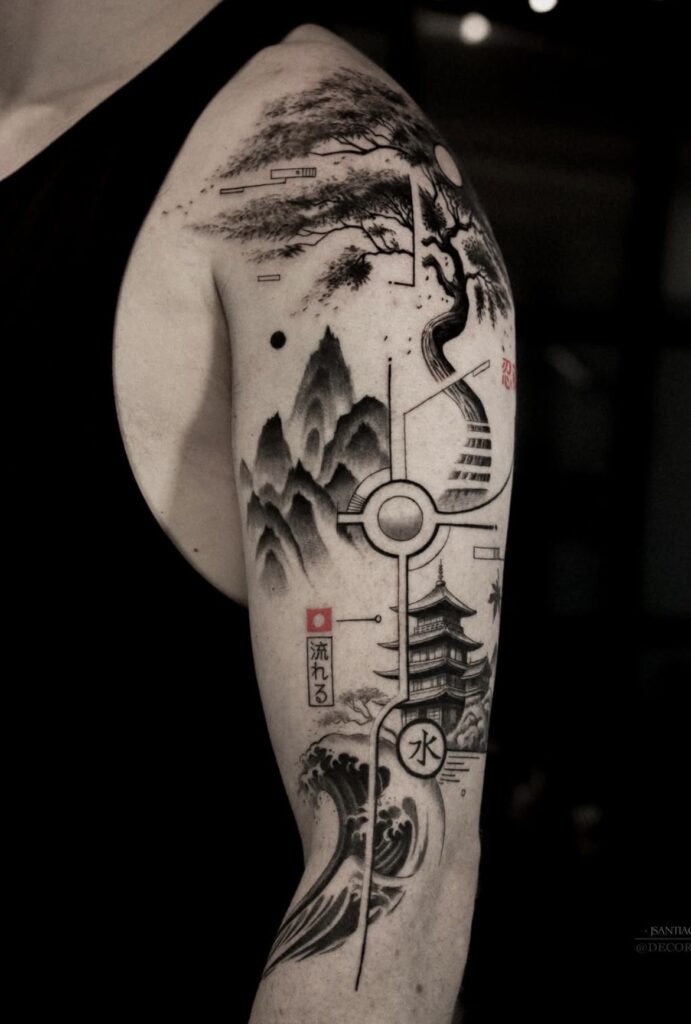
Tattooing is becoming less about fitting into a single category. Fewer people are choosing between “a Japanese tattoo” and “something else” — instead, they’re building a piece around an idea, a story, an emotion. It tends to feel far more personal than picking a predefined style off the shelf.
One of the first things we ask isn’t “what style do you want?” It’s “what are you drawn to?” More often than not, the answer isn’t a style at all. It’s a story, a feeling, a culture, a piece of art, a character, a memory. From there, the right artist can help translate those influences into something that’s entirely your own.
If there’s an idea you’ve been sitting with, that’s exactly what a free consultation is for: a conversation about what you’re drawn to, before any design work begins.
